

Gentle chiropractic care for babies, kids and teens.
A pediatric chiropractor in Scottsdale who has been ICPA certified since 2009 and in practice since 2003. Dr. Tracey Ryder treats children with pressure scaled to their age, from a fingertip for an infant to a light adjustment for a teen athlete, and explains everything to the parent first.
- ICPA certified, 2009
- In practice since 2003
- Instrument option for kids who prefer no hands-on adjusting
- Parents in the room for every visit
What it is
What a family chiropractor in Scottsdale does for kids
Children are not small adults. Their joints are more mobile, their bones are still forming, and the force appropriate for an adult adjustment is never used on a child. Pediatric chiropractic care uses pressure scaled to age: for an infant chiropractor in Scottsdale that means fingertip pressure, about what you would use to test a ripe tomato; for a school-age child a light, quick contact; for a teen a gentle adjustment closer to adult care but still lighter.
Parents bring kids here for posture, for the aches of growth spurts, for sports injuries in club and school athletes, for the neck and headaches that come with screens and backpacks, and for comfort and sleep when a child seems out of sorts after a fall. A chiropractor for kids in Scottsdale does not treat infections or developmental conditions, and Dr. Tracey will say so plainly if what a child needs is a pediatrician.
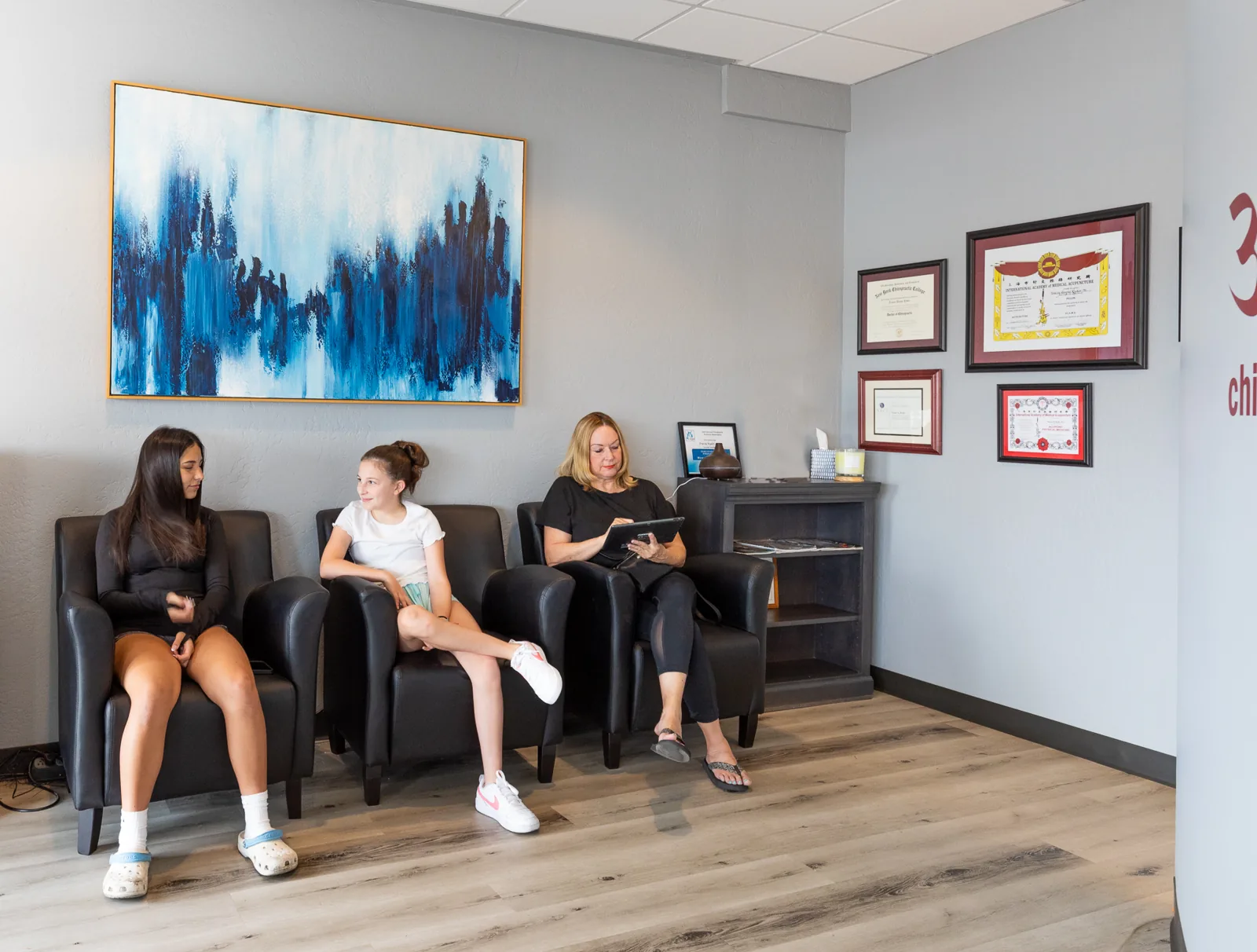
If you have been searching for a pediatric chiropractor near me from Old Town, Tempe or south Scottsdale, the office is on Scottsdale Road between McDowell and Thomas. A parent or guardian stays in the room for every visit, and nothing happens without their consent.
- Certification
- ICPA certified chiropractor in Scottsdale since 2009 (International Chiropractic Pediatric Association)
- Ages
- Infants, toddlers, school-age children and teens, with pressure scaled to each
- Most booked for
- Posture, growing pains, sports injuries, backpack and screen neck, headaches, comfort after a fall
- Parents
- In the room every visit; every step explained before it happens; consent required
Why ICPA
Why an ICPA certified chiropractor
The International Chiropractic Pediatric Association certification is additional training in how children's spines and joints differ from adults', how to examine a child at each stage of growth, and how to scale technique to age. Dr. Tracey completed it in 2009 after eight years running a family practice, and it is the reason her pediatric care uses fingertip pressure on infants, instrument adjusting for children who prefer no hands-on contact, and an exam that looks for the things that belong to a pediatrician rather than a chiropractor.
Is chiropractic safe for kids? With an appropriately trained provider using age-scaled techniques, the evidence and the professional guidance say yes for the musculoskeletal complaints it is used for here. The honest limit is that the research base for children is thinner than for adults, and no claim is made here about conditions outside the spine, joints and muscles.
By age
Infants, kids, and teens.
- /01
Infants
Fingertip pressure only. A gentle check of the neck, spine and hips, often while the baby is held by a parent. Comfort and mobility are the aims; we treat the spine, joints and muscles only.
Fingertip pressure
- /02
Kids
Light, quick contacts or the instrument for children who prefer it. Posture, growing pains, falls and the backpack neck. Everything is shown to the child first, and they can say stop.
Shown first, always
- /03
Teens
Closer to adult care but lighter. Sports injuries in club and school athletes, screen neck and headaches, scoliosis comfort alongside their physician's monitoring.
Athletes and students
Reasons parents come in
What we help kids and teens with
Pediatric versions are treated with the age-scaled techniques above.
Your visit
What a child's first visit is like
During the visit
- The parent describes what is going on; the child is asked too, at their level.
- A gentle, age-appropriate exam, with each step shown before it happens.
- A plain-language explanation to the parent, and a simpler one to the child.
- Gentle first treatment when appropriate, with consent.
After the visit
- Children usually respond quickly; most pediatric plans are short.
- Advice on backpacks, screens, sleep position or training load.
- A re-check at every visit, and a referral to the pediatrician for anything outside our scope.
Who it is for
Who pediatric chiropractic is for, and when to see the pediatrician first
Good reasons to book
- Posture, growing pains or back and neck discomfort in a child or teen.
- A sports injury in a young athlete.
- Headaches or neck pain from screens and backpacks.
- Comfort after a fall, once anything serious is ruled out.
- Scoliosis comfort alongside the physician's monitoring.
See the pediatrician first if
- There is fever, a limp with no known cause, or a child refusing to bear weight.
- A fall or injury has not been assessed for fracture.
- The concern is feeding, digestion, development or behavior. These belong to the pediatrician, and we do not claim to treat them.
A parent or guardian must be present and consent to every visit.
Kara D.
June 2026
Dr Ryder is amazing! She listens to and addresses all my concerns for myself and my kids (infant and toddlers). Jess and the other front desk staff are always super helpful and kind as well! I look forward to my visits!
Google reviewJamie T.
April 2026
Amazing prenatal massages + chiropractor work. Highly recommend.
Google review
Real questions
What parents ask.
Searched in Scottsdale Is chiropractic safe for kids?
With an ICPA-trained provider using pressure scaled to the child's age, the professional guidance and the available evidence support it for the musculoskeletal complaints it is used for here: posture, growing pains, sports injuries, neck and headaches. The research base for children is thinner than for adults, and no claims are made about conditions outside the spine, joints and muscles.
How old should a child be?
Any age, with technique scaled accordingly. Infants are checked with fingertip pressure; school-age kids with light contacts or the instrument; teens with gentle adjustments closer to adult care.
Will it hurt?
No. Pediatric adjustments use a fraction of adult force, every step is shown to the child first, and they can say stop at any point.
Do I stay in the room?
Yes, always. A parent or guardian is present for every visit, every step is explained to you before it happens, and nothing is done without your consent.
Do you treat young athletes?
Yes. Club and school athletes are a large part of the pediatric practice: sports injuries, taping, and the stiff joints that change form. See the sports injuries page.
( Book )
Book a visit for your child
Call the office or request an appointment online. Tell us your child's age and what is going on, and we will set up a gentle first visit with you in the room.
- Monday
- 8:30 AM to 6 PM
- Tuesday
- 8:30 AM to 12 PM
- Wednesday
- 8:30 AM to 6 PM
- Thursday
- 2 to 6 PM
- Friday
- 8:30 AM to 6 PM
- Saturday to Sunday
- Closed
Directions in Google Maps
Prefer to talk? Call (480) 900-5280.