

Foot and ankle pain, including plantar fasciitis.
A plantar fasciitis chiropractor in Scottsdale for the heel that screams on the first steps of the morning, and a foot pain chiropractor in Scottsdale for the sprains, stiff ankles and aching arches that come with life on hard floors and desert trails. Dr. Tracey Ryder treats the foot as a set of joints, not a single sore spot.
- In practice since 2003
- Chiropractic, acupuncture and massage in one plan
- Old Town Scottsdale, Scottsdale Road
- 4.9 from 75 Google reviews
What it is
What a chiropractor for feet pain treats
The foot has twenty-six bones and more than thirty joints, and it is supposed to move through all of them with every step. When some of them stiffen, from an old sprain, from hard floors, from shoes that hold the foot rigid, the tissues that span the foot take the strain instead. The plantar fascia along the sole is the best known: it tightens overnight, tears a little with the first steps, and produces the classic stabbing heel pain that eases as you warm up and returns after sitting.
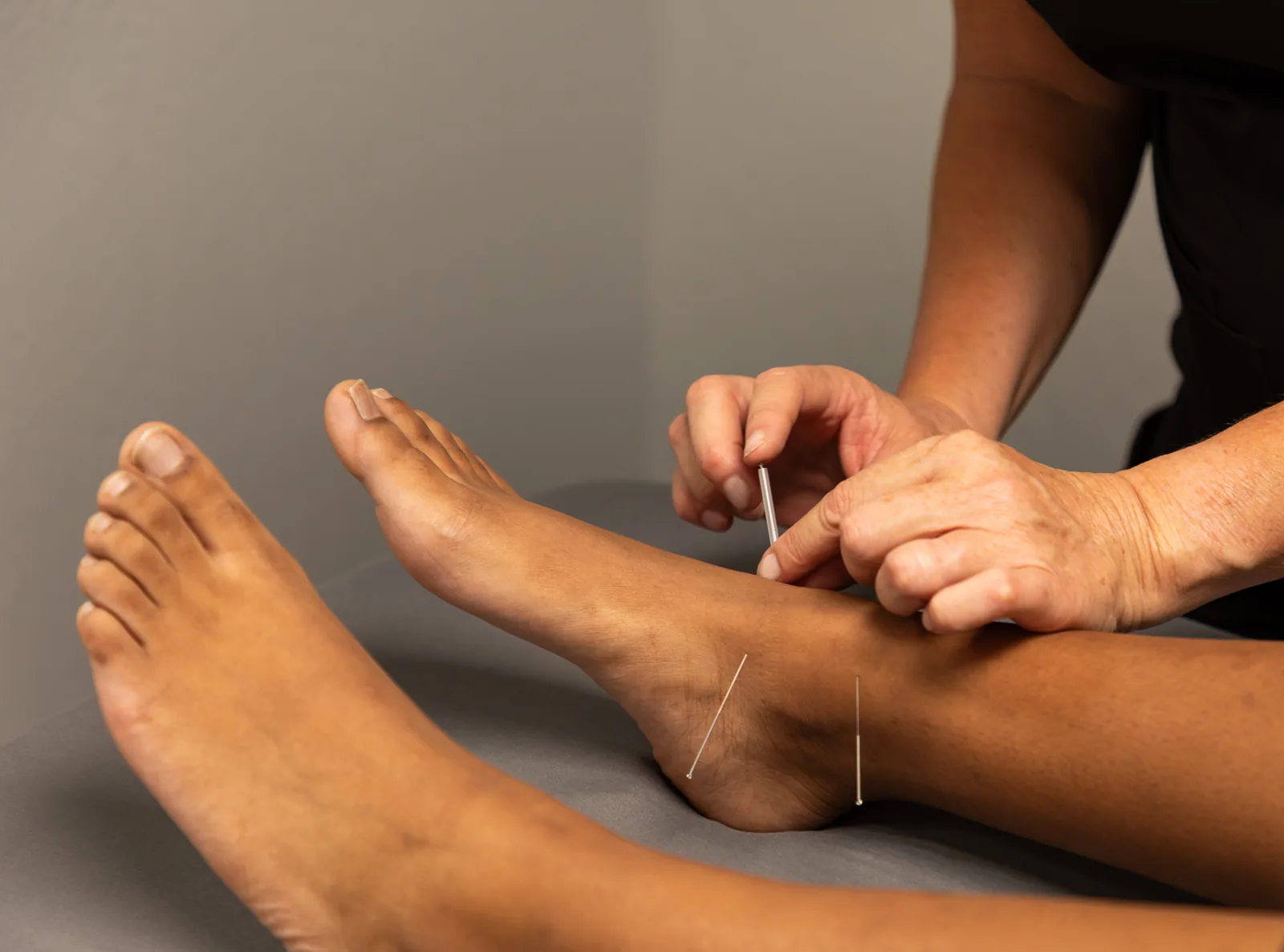
Plantar fasciitis treatment in Scottsdale at Ryder starts with restoring motion to the foot and ankle joints so the fascia is not doing the joints' job, releasing the calf, which pulls on the heel, and calming the inflamed tissue with acupuncture for foot pain in Scottsdale. An ankle pain chiropractor in Scottsdale does the same for a stiff or repeatedly sprained ankle: restore the motion the sprain took away, so the ankle stops rolling.
If you have been searching for a plantar fasciitis chiropractor near me from Old Town, Tempe or south Scottsdale, the office is on Scottsdale Road between McDowell and Thomas. Bring the shoes you wear most.
- Where it hurts
- The heel on the first steps, the arch, the top of the foot, the outside of the ankle, the ball of the foot
- Common causes
- Stiff foot and ankle joints, tight calves, hard floors, rigid or worn shoes, a sprain that never fully recovered, running volume
- What we use
- Foot and ankle adjustments, acupuncture, calf and plantar massage, taping
- First visit
- History, foot and ankle exam, walking and calf tests, hip and knee check, explanation, first treatment when appropriate
What is going on
Why the heel hurts on the first steps
The plantar fascia is a band of tissue from the heel to the toes that tensions the arch as the foot pushes off. It works with the calf: a tight calf lifts the heel early and loads the fascia harder. Overnight the fascia shortens; the first steps stretch it abruptly and tear the irritated fibers at the heel a little, which is the morning stab. If the foot joints are stiff, the fascia is also doing the shock absorption they should be doing, all day.
Restoring motion to the foot and ankle joints gives the load somewhere else to go. Releasing the calf and the fascia itself reduces the pull on the heel. Acupuncture settles the inflamed attachment. Taping supports the arch between visits. A stiff or unstable ankle from an old sprain is treated the same way: the joints that lost motion get it back, and the ankle stops rolling.
Symptoms
What people come in with
Foot and ankle problems tend to look like this:
- Stabbing heel pain on the first steps
- Heel pain after sitting
- Arch ache by the end of the day
- An ankle that rolls easily
- Stiff ankle after an old sprain
- Pain on the top of the foot
- Burning in the ball of the foot
- Tight calves
- Pain barefoot on tile
- Foot pain that came with new running mileage
Numbness or burning in both feet may be neuropathy rather than a foot problem.
How we treat it
How we treat foot and ankle pain
Joints first, then the tissue that has been doing their job.
Chiropractic
Adjustments to the foot and ankle joints that have stiffened, and to the hip and knee when they are changing how the foot lands. Taping to support the arch or the ankle between visits.
Acupuncture
Points at the heel, arch and calf for the inflamed fascia, and around the ankle for a sprain that has stayed sore.
Massage
Release of the calf and the plantar fascia, and the muscles along the shin and the outside of the lower leg that guard an unstable ankle.
Your visit
What a first visit for foot pain is like
During the visit
- When it hurts most, your footwear, your floors, your activity, any sprain history.
- Foot and ankle joint exam, calf length, walking, single-leg balance, a look at the hip and knee.
- A plain-language explanation of which joints have stiffened and what is taking the load.
- First treatment when appropriate.
After the visit
- Plantar fasciitis changes over a short course; a long-standing case takes longer and the plan says so.
- Calf stretches, a footwear conversation, and what to avoid for now.
- A re-check at every visit.
Causes
What commonly causes it
What stiffens the foot and loads the fascia.
Tight calves
Lift the heel early and load the fascia.
Hard floors
Tile and concrete, barefoot, all day.
Rigid or worn shoes
Hold the foot still or let it collapse.
An old sprain
Joints that never regained motion.
Running mileage
Volume up faster than the feet adapt.
Standing work
Retail, healthcare, trades.
When to come in
When to see us, and when to see a doctor first
Good reasons to book
- Heel pain on the first steps of the day.
- Arch or foot pain after standing or walking.
- An ankle that keeps rolling, or is stiff after a sprain.
- Foot pain that came with new mileage.
- Foot pain treated with inserts alone without lasting change.
See a doctor first if
- You cannot bear weight after an injury, or the foot or ankle is misshapen.
- There is redness, heat, fever or a wound that is not healing.
- You have diabetes and a new foot problem.
- Sudden severe pain in the calf with swelling.
If the exam points to a fracture or a problem we should not treat, Dr. Tracey will say so and refer you.
Real questions
What people ask about foot pain.
Searched in Scottsdale What does plantar fasciitis treatment in Scottsdale involve here?
Restoring motion to the stiff foot and ankle joints so the fascia stops doing their job, releasing the calf and the fascia itself, acupuncture for the inflamed heel attachment, and taping to support the arch between visits. Footwear and floors are part of the conversation. Most cases change over a short course; long-standing ones take longer.
Can a chiropractor adjust feet?
Yes. The foot has more than thirty joints, and the ones that have stiffened after a sprain or years on hard floors respond to gentle, specific adjustments the same way spinal joints do.
Does acupuncture help plantar fasciitis?
It settles the inflamed attachment at the heel and the tight calf, and it is usually part of the plan here alongside the joint and soft tissue work.
Should I wear inserts?
Sometimes, for a while. Inserts support the arch but do not restore motion to stiff joints, which is why many people find they help only while they are in the shoe. We look at what you are wearing and advise.
My ankle keeps rolling. Can that be fixed?
Usually the ankle lost motion after a sprain and never got it back, so it compensates by rolling. Restoring that motion, releasing the muscles guarding it, and taping while balance returns changes it for most people.
( Book )
Book a visit for foot or ankle pain
Call the office or request an appointment online. Tell us where it hurts and how long it has been going on, and we will set up the right first visit.
- Monday
- 8:30 AM to 6 PM
- Tuesday
- 8:30 AM to 12 PM
- Wednesday
- 8:30 AM to 6 PM
- Thursday
- 2 to 6 PM
- Friday
- 8:30 AM to 6 PM
- Saturday to Sunday
- Closed
Directions in Google Maps
Prefer to talk? Call (480) 900-5280.