

Herniated and bulging disc care in Scottsdale.
A herniated disc chiropractor in Scottsdale for the disc injury that has you afraid to bend. Dr. Tracey Ryder treats bulging and herniated discs conservatively, with gentle adjustments, acupuncture and massage, and refers on the day the exam says she should.
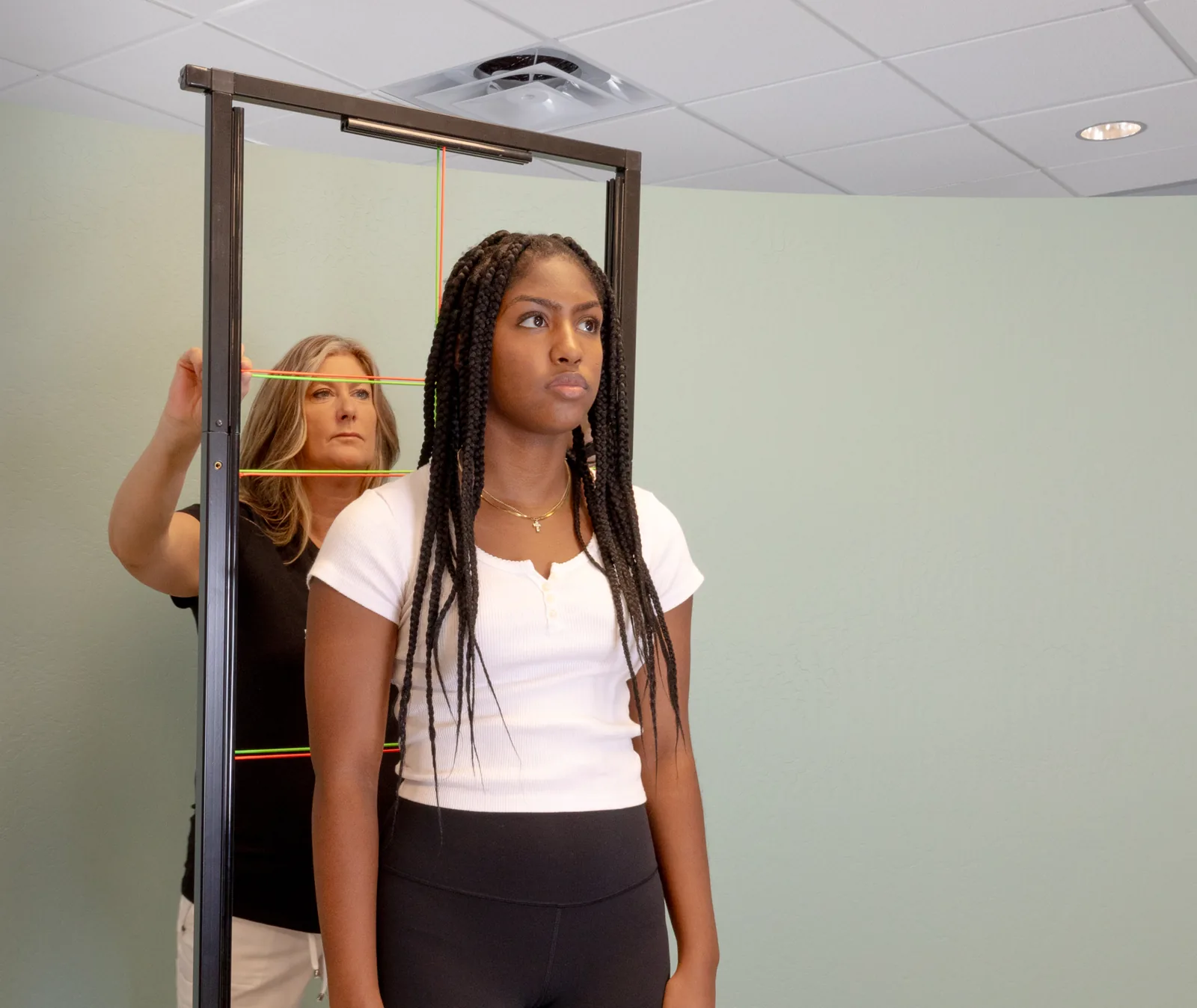
- In practice since 2003
- Chiropractic, acupuncture and massage in one plan
- Old Town Scottsdale, Scottsdale Road
- 4.9 from 75 Google reviews
What it is
What a chiropractor for herniated disc care does, and does not do
A disc is the cushion between two vertebrae: a firm outer ring around a soft center. A bulging disc has a ring that is pushed outward but intact. A herniated disc has a ring that has torn, letting some of the center out. Both can press on the nerve root beside them, and both are far more common than the scan reports suggest, since many people have bulges on imaging and no pain at all.
A bulging disc chiropractor in Scottsdale treats the disc's environment: the segment that has stopped moving and is loading the disc, the muscle guarding around it, the irritated nerve. Adjustments here are gentle and specific, often instrument-based for a fresh herniation, never a forceful twist through an injured disc. Herniated disc treatment in Scottsdale at Ryder also uses acupuncture for the nerve pain and massage to unload the guarding muscle.
If you have been searching for a herniated disc chiropractor near me from Old Town, Tempe or south Scottsdale, the office is on Scottsdale Road between McDowell and Thomas. Bring any imaging you have.
- Where it hurts
- Low back or neck, often with pain, tingling or numbness into a leg or arm
- Common causes
- Lifting with a rounded back, long sitting, a twist under load, disc wear with age
- What we use
- Gentle manual or instrument adjustments, acupuncture, massage of guarding muscle
- First visit
- History, nerve and motion tests, review of any imaging, explanation, first treatment when appropriate
What is going on
How a disc gets injured and why it hurts
Discs handle compression well and twisting under load badly. Bend forward with a rounded back and lift, and the front of the disc is squeezed while the back of it is stretched, pushing the soft center backward against the ring. Do that enough times, or once with enough weight, and the ring gives. The disc itself has few nerves; the pain comes from the inflamed ring, the nerve root beside it, and the muscles that lock down to protect the area.
Degenerative disc disease is the same tissue changing with age: discs lose water and height, and the joints behind them take more load. A degenerative disc disease chiropractor in Scottsdale treats that the same way: keep the segments moving, keep the muscle from guarding, keep the nerve calm. Most disc injuries improve with conservative care over weeks; the exam and a re-check at each visit tell us whether yours is.
Symptoms
What people come in with
A disc injury has a recognizable shape.
- Sharp low back or neck pain after lifting or a twist
- Pain that runs into a leg or arm
- Numbness or tingling in the limb
- Worse sitting, coughing or sneezing
- Relief lying down
- A back locked forward or to one side
- Weakness in the foot or hand
- Pain that changes with position
- Stiffness on waking
- Fear of bending
If leg pain is the main symptom, the sciatica page covers it in more detail.
How we treat it
How we treat a herniated or bulging disc
Conservative care, gentle techniques, and a referral the day the exam calls for one.
Chiropractic
Gentle, specific adjustments to restore motion around the injured disc without loading it. Instrument adjusting is often the first choice for a fresh herniation.
Acupuncture
Points along the spine and the affected limb to calm the irritated nerve root and the muscle guarding around the segment.
Massage
Careful work on the muscles that have locked down to protect the disc, so the segment can move without the guarding pulling it back.
Your visit
What a first visit for a disc injury is like
During the visit
- How it happened, where the pain runs, whether there is numbness or weakness, what imaging you have.
- Nerve tension tests, reflexes, motion checks, hands-on exam of the spine.
- A plain-language explanation of what the disc is doing and what the plan is.
- First treatment when appropriate, matched to how irritated the nerve is.
After the visit
- A fresh disc injury settles over weeks, not visits; the aim of the first visits is to calm it and get you moving safely.
- Advice on sitting, lifting, sleeping position and what to avoid for now.
- A re-check at every visit, and imaging or a referral if weakness progresses or the plan is not working.
Causes
What commonly causes it
The loads a disc handles badly.
Lifting with a rounded back
The classic one. Moving day, the gym, the garden.
Twisting under load
Reaching into the back seat, a golf swing, shoveling.
Long sitting
Sustained pressure on the front of the disc.
Disc wear
Discs dry out and lose height with age.
A fall or a crash
Sudden compression through the spine.
Repetitive bending
Trades, nursing, childcare.
When to come in
When to see us, and when to see a doctor first
Good reasons to book
- Back or neck pain with pain, tingling or numbness into a limb.
- A disc bulge or herniation on imaging, with pain you want treated conservatively.
- Low back pain after lifting that has not settled in a few days.
- Degenerative disc disease with stiffness and recurring flares.
- A disc injury treated elsewhere without lasting change.
See a doctor first if
- You lose control of your bladder or bowel, or have numbness in the groin or inner thighs. This is an emergency.
- Weakness in a leg, foot, arm or hand is getting worse quickly.
- Severe pain in both legs at once.
- Fever, unexplained weight loss or a history of cancer with new spinal pain.
If anything in the exam points to a problem we should not treat, Dr. Tracey will say so and refer you.
Real questions
What people ask about disc injuries.
Searched in Scottsdale Can a chiropractor help a herniated disc?
In most cases, yes, as part of conservative care. A chiropractor does not push the disc back in; the adjustment restores motion to the segment so the disc is loaded less, while acupuncture and massage calm the nerve and the guarding muscle. Most herniations improve over weeks with this approach. The exam identifies the minority that need imaging or a surgical opinion first.
Is it safe to adjust a herniated disc?
With the right technique, yes. Dr. Tracey does not use forceful twisting through an injured disc; she uses gentle, specific adjustments, often with an instrument, chosen after nerve tests at the first visit. If the exam says an adjustment is not appropriate yet, she will say so.
Do I need surgery?
Most people with a herniated disc do not. Surgery is considered when weakness is progressing, when bladder or bowel control is affected, or when a fair trial of conservative care has not helped. Dr. Tracey will tell you plainly if your case looks like one of those.
Should I rest or move?
Move, carefully. Bed rest beyond a day or two tends to slow recovery. You will leave the first visit with what to do and what to avoid for now.
Bulging versus herniated, does it matter?
A bulge has an intact outer ring; a herniation has a tear. Herniations tend to be more painful early and can take longer to settle, but both are treated the same way and both usually improve without surgery.
( Book )
Book a visit for a disc injury
Call the office or request an appointment online. Tell us where it hurts and how long it has been going on, and we will set up the right first visit.
- Monday
- 8:30 AM to 6 PM
- Tuesday
- 8:30 AM to 12 PM
- Wednesday
- 8:30 AM to 6 PM
- Thursday
- 2 to 6 PM
- Friday
- 8:30 AM to 6 PM
- Saturday to Sunday
- Closed
Directions in Google Maps
Prefer to talk? Call (480) 900-5280.