

Does Acupuncture Hurt? What the First Session Actually Feels Like
October 8, 2026 · 7 min read · Dr. Tracey Ryder, DC
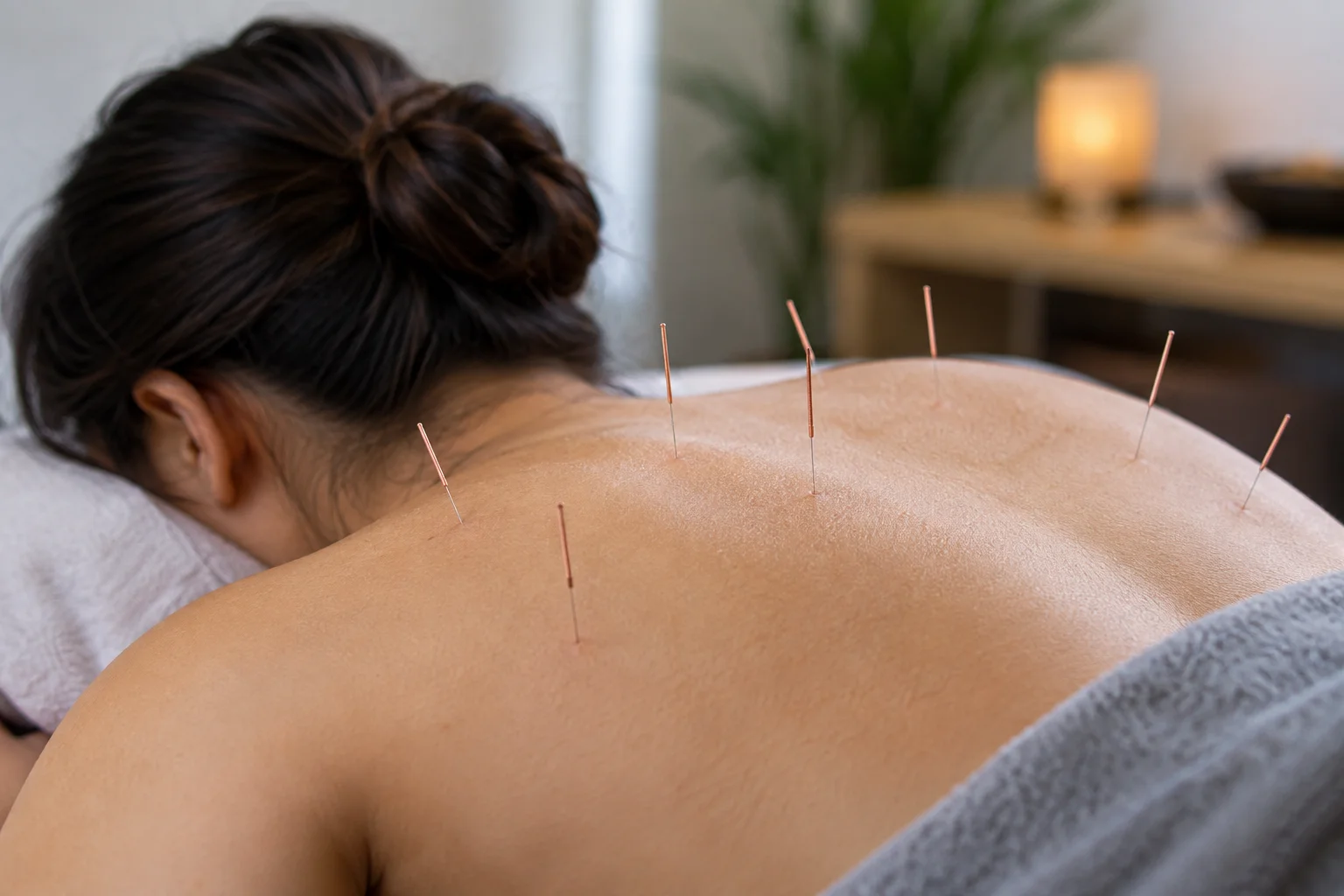
Does acupuncture hurt? For most people, the honest answer is no, not the way a shot or a blood draw does. Most people feel a brief pinch and then pressure, warmth, or nothing at all as thin acupuncture needles settle into specific points along the body.
01
Does Acupuncture Hurt or Is It Just Pressure?
Pain and pressure are not the same thing, and that difference is the whole story with acupuncture. Acupuncture needles are solid, hair-thin filaments, nothing like the hollow, larger-gauge needles used for injections or blood draws. When one is placed correctly, the nervous system usually registers a dull ache, a spreading warmth, or a light electrical tingle rather than sharp pain. In traditional Chinese medicine, this sensation is called deqi, a signal that the needle has reached the right depth at specific points along a meridian. A licensed acupuncturist watches for it and adjusts pressure or angle if a spot feels more intense than it should.
### What Does Acupuncture Actually Feel Like During a Session?
Sensations vary by area of the body, but most patients describe them in similar terms: a light tingling, a dull ache, heaviness, warmth, or occasionally a brief zing that fades in a second or two. Some spots produce almost no feeling at all. Light pressure at each point is the response most practitioners hope for in a first session. If something feels more like a pinch than pressure, that is useful feedback, not something to push through.
02
How Big Are Acupuncture Needles, and Can You Feel Them Go In?
Acupuncture needles are far smaller than most people expect. A typical needle is roughly as thin as a strand of hair, about 0.16 to 0.30 millimeters wide, compared to the hypodermic needles used for a flu shot or blood draw, which are many times thicker and hollow to allow fluid through. Because acupuncture needles are solid and so fine, insertion is usually quick and light, often described as a light tap or a brief pinch rather than the drag of a larger needle. A guide tube lets the practitioner place each needle in one quick, precise motion, which limits the sensation at the moment of entry.
### Does Acupuncture Hurt More Than a Shot or a Tattoo?
For most people, acupuncture is milder than either. A flu shot or blood draw uses a hollow needle to enter a vein or muscle, and a tattoo needle punctures the same spot of skin repeatedly, both of which reliably hurt more than a single, fine acupuncture needle resting just under the skin. Acupuncture also spreads sensation across many small points rather than concentrating it in one spot, so it tends to feel more like acupressure than an injection.
03
What Happens During Your First Acupuncture Session?
Your first acupuncture session usually starts with a conversation, not a needle. The practitioner reviews your health history, current symptoms, and goals, such as chronic pain, stress, sleep, or general wellness. In traditional Chinese medicine, this often includes checking your pulse and looking at your tongue, both used to build a picture of where the body is out of balance. Once a treatment plan is set, you'll lie down comfortably while needles are placed at specific points, then rest quietly while they stay in. Most people find this part relaxing, sometimes even falling asleep.
### Why Do Some Acupuncture Points Hurt More Than Others?
Sensitivity depends heavily on location. Areas with more nerve endings, like the hands, feet, and face, tend to feel sharper or more noticeable than fleshier areas like the thigh or lower back. Spots that sit over tight, overworked muscle, common in tension headaches or low back pain, can also feel more tender because the tissue itself is already irritated. None of this means the treatment is working harder; it simply reflects how nerve density and muscle tone vary across the body.
04
Does the Discomfort Improve After Your First Few Sessions?
Yes, for most people it does. Much of the initial tension around a first visit comes from not knowing what to expect, and that eases quickly once the body recognizes the sensation as safe rather than threatening. Muscle tissue that was tight at the first appointment often softens with repeated treatment, which is part of why acupuncture treatment is often used for ongoing pain management rather than a single fix. Patients who stick with a treatment plan often find later sessions calmer than the first, and the benefits become easier to notice once initial nervousness fades.
### Is Acupuncture Painful for Treating Back Pain Specifically?
Back pain is one of the most common reasons people try acupuncture, and it is generally well tolerated. Because back muscles sit deeper than skin on the hands or feet, needling here often produces a dull, heavy ache rather than a sharp sensation, and many patients describe it as a good kind of discomfort, similar to a firm massage. Acupuncture for back pain is often used alongside chiropractic care, and coordinating both with your care team helps them work together rather than in isolation.
05
How Long Does Soreness or Bruising Last After Acupuncture?
Mild soreness at a needle site, similar to the ache after a light workout, is common and usually fades within a day. Occasionally a small blood vessel near the surface is nicked during insertion, leaving a faint bruise that can last anywhere from a few days to about a week. Neither is a sign that something went wrong. If soreness lingers well beyond a few days, feels sharp rather than dull, or comes with swelling or redness, that's worth mentioning to your practitioner or your primary care provider.
### What Should You Tell Your Practitioner If a Needle Hurts During Treatment?
Speak up right away. A dull ache, warmth, or heaviness is expected, but a sharp, shooting, or burning sensation is not, and your practitioner needs to know the moment it happens. They can adjust the needle's depth or angle, remove it entirely, or choose a different point nearby. Good communication keeps a session comfortable, and an experienced acupuncturist would rather hear about discomfort than have you push through it.
06
Can Acupuncture Still Work If You're Afraid of Needles?
Needle anxiety is common, and it does not have to rule out treatment. Because acupuncture needles are so thin and solid, the sensation is a world away from the hypodermic needles most people associate with fear, and many patients who avoid blood draws still tolerate acupuncture well. Letting your practitioner know about the anxiety ahead of time helps them ease you in, such as starting with points on the hands or feet, using fewer needles at first, or letting you see and feel the needle before it's placed. A little extra time spent easing into the first session usually resolves most of the worry.
### Is Dry Needling More Painful Than Traditional Acupuncture?
Often, yes. Dry needling specifically targets tight muscle bands to trigger a small twitch response, and that twitch, along with deeper muscle penetration, tends to produce a stronger, more sudden sensation than traditional acupuncture aims for. Traditional acupuncture, rooted in traditional Chinese medicine, works with a lighter touch at specific points chosen for broader effects on pain and function, not just the local muscle. Neither technique is objectively better, but people who find dry needling too intense often tolerate traditional acupuncture more comfortably.
07
Talk to Ryder Chiropractic and Longevity About Managing Your Pain
If chronic pain, tension, or old injuries have you curious whether acupuncture could fit into your care plan, our team can walk through what a first session would look like for your specific concerns. Reach out to the Ryder Chiropractic and Longevity Team to ask questions and find out if acupuncture is a good next step for you.
Questions
Common questions
Does acupuncture hurt more than getting blood drawn?
For most people, no. A blood draw uses a hollow needle to access a vein, thicker and designed to draw fluid, while an acupuncture needle is solid, hair-thin, and placed just under the skin. Most patients find acupuncture noticeably milder, often describing it as pressure or a light tap rather than the pinch of a blood draw.
Is it normal to feel nothing at all during an acupuncture session?
Yes. Sensation varies by point and by person, and some areas, especially on the limbs, produce very little feeling. A lack of sensation does not mean the treatment isn't working; it simply reflects how nerve density differs across the body.
How many sessions does it take before acupuncture stops feeling uncomfortable?
Most people notice less apprehension by their second or third visit, once they know what the sensations feel like and trust the process. Physical soreness, when it happens, typically fades within a day after each session.
Can acupuncture help with chronic pain if I have a low pain tolerance?
Usually, yes. Acupuncture is generally gentler than many other pain management approaches, and needle depth, number, and placement can all be adjusted for sensitivity. Tell your practitioner about your pain tolerance before your first session so they can start conservatively and adjust as you both learn how your body responds.
Next
Where to go from here
Call (480) 900-5280 or request an appointment and tell us where it hurts.